Resolution to Sludgy Situations with the Cooperation of Plants and Microorganisms
By Jose Chavana
Broadening the understanding of recent discoveries contributing to our environmental sustainability, from agriculture to energy. EcoChronicles is a blog updated by the students in the Environmental Science course at Texas A&M International University, Laredo, TX. We love our planet Earth!
Resolution to Sludgy Situations with the Cooperation of Plants and Microorganisms
By Jose Chavana
By: Reynaldo Gonzalez
By: Jorge Sanchez
We all love to discover sugar within our fruits, vegetables, and food products to supply ourselves with energy, and ensure that beautiful sweet taste on our palate. The United States relies on Florida to produce a majority of its sugar for the country, and it has dedicated regions filled with sugarcane fields that extend to dozens of acres. Though, the process of harvesting this sugarcane may prove harmful to the residents that live nearby these regions. The harvesting process starts with prescribed fires that burns away leaves and flowers that fertilize the soil, which makes it easier for sugar refinement and replanting the fields later in time. Unfortunately, the issue lies with the burning fields causing high amounts of particle pollution like smoke and ashes, which spreads into the surrounding cities. The residents in these cities breathe in these particles, which is linked to lung and other cancers, cardiopulmonary disease such as ischemic heart disease, and premature death (Nowell et al., 2022). A simple solution would be to stop burning the sugar cane fields, except we would have to discover a different method to pick out the leaves and flowers, and find a new solution to fertilize the soil. Burning the sugar cane fields saves time, reduces the amount of labor needed for sugar refinement, and prepares the soil for future replanting. The current harvesting method helps with selling the sugar in a timely manner. Thus, an alternative method might not be cost effective as burning the sugarcane, and doesn't deny the possibility of causing other issues that may also be harmful for humans and the environment.
Original Article:
Nowell H, Wirks C, Martin M, Donkelaar R, Martin R, Uejio C, Holmes C. 2022. “Impacts of sugarcane fires on air quality and Public Health in south Florida.” Environmental Health Perspectives. 130(8). https://doi.org/10.1289/ehp9957.
The Lignin Link: Connecting Sustainability and Technology
By: Israel Adame
![]() |
A cartoon photo depicting the journey of lignin polymers. From plants to factories to lignin, with the cartoon depiction of a lignin polymer taking up the majority of the bottom of the photo. (Source: Lignin Biopolymers in the Age of Controlled Polymerization published by https://www.mdpi.com/2073-4360/11/7/1176). |
By Joel Martinez
By Fernanda Castillo
Saline and alkaline stress on soil creates problems such as loss of vegetation, decreased nitrification rates, loss of available phosphorous, and of course, high pH (Guo et al. 2021). As a result, these environments are low in available nutrients and face degradation. A 2024 study focuses on phosphorus-solubilizing bacteria (PSB), and how they interact with soil microbial composition, nutrient cycling, and plant resilience in coastal wetlands (Sun et al.). In saline and alkaline soils, beneficial PSB such as Bacillus and Exiguobacterium have shown to significantly boost plant growth. These bacteria lower soil pH, ensuring nutrients like phosphorous, nitrogen, and potassium are more available for plants (Sun et al. 2024).
Phosphorous is already present in the soil. However, high pH causes the phosphorous to bind to calcium that is present in alkaline soil. This creates a form of phosphorous that plants are unable to use for chemical reactions such as photosynthesis. Now, here is where the bacteria get to work. The bacteria that were studied help release the phosphorous by secreting organic acids, which lower the soil's pH and bind to the calcium-phosphate molecules. This makes the phosphate soluble, which then makes it easier for plants to use it (Sun et al. 2024).
![]() |
| A diagram of phosphate-solubilization mechanisms (Iftikhar et al. 2023). |
The study tested these PSB strains on soils both treated with saline and alkaline solutions, and on non-stressed conditions, which were treated with sterile water. The soils were then used to plant Suaeda salsa (L.) Pall, an annual herb resistant to salinity and drought that is commonly found in coastal wetlands (Li et al. 2021). These tests found that the PSB strains improved plant growth only on the plants growing in the stressed conditions; the plants growing in non-stressed conditions that were inoculated with PSB decreased in biomass. Under saline and alkaline stress, the bacteria were able to reduce the soil pH and in turn, enhance the availability of phosphorus, nitrate, and potassium. In the absence of these stressed conditions, the bacteria were very weak at solubilizing phosphate. Interestingly, the study also found that the soil microbial communities were altered in the stressed soils inoculated with PSB, due to the change in pH and salinity after the phosphate-solubilization. The decreases in pH and salinity caused certain microorganisms to be affected because of their sensitivities to certain conditions (Sun et al. 2024).
This research mainly diverts attention to S. suaeda restoration in East Asia and Australasia, but the findings can easily be applied to any areas of the world struggling with high salinity and alkaline soil. Soil health is an extremely important topic that most people should be educated on, especially those in agriculture. Biological solutions in soil management helps promote sustainable land use and soil remediation instead of land degradation (Sun et al. 2024).
Guo J, Zhou Y, Guo H, Min W. 2021. Saline and alkaline stresses alter soil properties and composition and structure of gene-based nitrifier and denitrifier communities in a calcareous desert soil. BMC Microbiology. 21:246. https://doi.org/10.1186/s12866-021-02313-z.
Iftikhar A, Farooq R, Akhtar M, Khalid H, Hussain N, Ali Q, Saif ul Malook, Ali D. 2024. Ecological and sustainable implications of phosphorous-solubilizing microorganisms in soil. Discov Appl Sci. 6(2). https://doi.org/10.1007/s42452-024-05683-x.
Song Y, Liu J, Wang J, Liu F. 2021. Growth, Stoichiometry, and Palatability of Suaeda salsa From Different Habitats Are Demonstrated by Differentially Expressed Proteins and Their Enriched Pathways. Front Plant Sci. 12. https://doi.org/10.3389/fpls.2021.733882
Sun X, Wang W, Yi S, Zheng F, Zhang Z, Alharbi SA, Ekaterina Filimonenko, Wang Z, Yakov Kuzyakov. 2024. Microbial composition in saline and alkaline soils regulates plant growth with P-solubilizing bacteria. Appl Soil Ecol. 203:105653–105653. https://doi.org/10.1016/j.apsoil.2024.105653
Film of bioplastic created through PHA Synthesis (Left) and bottle caps produced by PHA bioplastic (Right)
(Source: PHA bioplastic made with the help of predatory bacteria, by MaterialDistrict, https://materialdistrict.com/article/pha-bioplastic-predatory-bacteria/, CJ Biomaterials unveils fully biodegradable PHA bottle cap by Bioplastic Magazine, https://www.bioplasticsmagazine.com/en/news/meldungen/20240403-CJ.php.)
Plastic products are widely used in everyday life, from household items like bottled water, food containers, and grocery bags to disposable gloves, sterile packaging, and syringes seen in hospitals. However, plastics such as polypropylene and polyethylene are created from nonrenewable resources such as fossil fuels, which take years to degrade and negatively impact the environment through microplastics and pollution. Because of this, it is important to find biodegradable alternatives to plastic products.
Bioplastics, such as polyhydroxybutyrate, can be synthesized through the process of polyhydroxyalkanoate (PHA) production. This process consists of feeding bacteria a carbon source while limiting other nutrients. These bacteria then create PHA's as a nutrient storage, which can be extracted to create bioplastics. These bioplastics can be used to create alternatives for common plastic products. However, producing a food source for bacteria can be costly, hindering these products from becoming easily accessible.
To synthesize bioplastics, the researchers of this article collected cane molasses, a by-product of sugar cane waste, creating an inexpensive, environmentally sustainable carbon source for the bacterial species, Alcaligenes sp. NCIM 5085. Since cane molasses is a by-product, it is usually discarded as waste. Utilizing the sugar by-product reduces waste and allows bioplastics to become more available. The article suggests that this research could be used to make bioplastics more easily accessible to consumers. However, this process has several tradeoffs, one example being that the fermentation process can become time-consuming while still being more expensive than plastic.
Overall, since plastics are detrimental to the environment, it is important to find plastic alternatives to limit pollution. This research advances environmental science by offering an alternative to plastic products and preventing cane molasses from becoming a wasted material.
Original Article:
Kanzariya R , Gautam A , Parikh S, Gautam S. 2022. Kinetics of biomass and polyhydroxyalkanoates synthesis using sugar industry waste as carbon substrate by Alcaligenes sp. NCIM 5085. J. Environ. Biol.[accessed 2024 October 11]; 44 (4): 612-622. http://doi.org/10.22438/jeb/44/4/MRN-5096 .
| Fig. 1. Environmental conflicts registered in the EJAtlas (n = 3030). A: Geographical coverage of environmental conflicts (each dot represents one case and each colour a category of conflict). B: Category of conflicts and coverage (pie colours correspond to the colour of the cases shown in the map). C: Percentage of EHC cases and non-EHC cases. This figure follows a similar representation as in Scheidel et al., 2020. |
Navas G, D’Alisa G, Martínez-Alier J. 2022. The role of working-class communities and the slow violence of toxic pollution in environmental health conflicts: A global perspective. Global Environmental Change. 73:102474. doi:https://doi.org/10.1016/j.gloenvcha.2022.102474.
By: Yesnia Solis
As concerns about the impacts of global warming grow each year, scientists and agricultures worry about how this problem may impact plants and the natural capital. Researchers have been studying how we can restore the natural capital of agriculture, but the earth may be capable of doing it itself. A study was conducted on the perennial pasture grass Festuca arundinacea throughout the four seasons, with the grass being in subplots that were subjected to simulated drought by less irrigation and a warming climate by adjusting the temperature of the site of study. Researchers observed the root plasticity of the grass and how it adapted to the changes. When the grass underwent “drought,” its roots would grow deeper to reach water but have a reduced diameter, maintaining the grass through the seasons. However, it had lower productivity in colder seasons. A warmer climate combined with drought also reduced the diameter of the roots and the nitrogen concentrations, causing lower production and reduced biomass. This shows that, while plants adapt to survive against environmental struggles, their productivity is not assured to be on the same level as the demand we have for them. Our resource demand and climate change are severely affecting our natural capital, and even if plants can adapt, we need to consider our future, knowing the effects we are causing.
Original article:
Chandregowda MH, Tjoelker MG, Pendall E, Zhang H, Churchill AC, Power SA. 2023. Belowground carbon allocation, root trait plasticity, and productivity during drought and warming in a pasture grass. Jrnl of Exp Botany. 74(6):2127-2145. https://doi.org/10.1093/jxb/erad021
The industry behind making modern electronics is very unsustainable due to the mining of rare earth metals and fabricating these electronics uses a lot of energy. As global e-waste grows 10% annually and has about a 10% recovery rate. However, there have been new advancements in techniques on how to use bipolymers such as cellulose which is found in wood to be used in flexible electronics. A flexible electronic system is made of three parts: substrate, backplane, and frontplane in order for the electronic to be flexible it must be lightweight, resilient, and moldable and in order for the electronic to work all of its parts must be flexible. Cellulose by itself is a very strong polymer as it is what gives wood its shape, by isolating the cellulose from lignin it can create a transparent wood film. This is where wood product cellulose comes in, it has been shown to be a great substrate as they have properties similar to nonbiodegradable substrates such as plastics but also has better characteristics such as its ability to be recycled and flexibility. However, the only drawback is that cellulose cannot conduct electricity well, but with conductive materials added to it can. Continuing research into this new method of making electronics, it can help elevate the environmental toll on the earth by making electronics sustainable and relying less on non-biodegradable toxic products.
Malik H et al. Wood as a green and sustainable alternative for environmentally friendly & flexible electronic devices. Chemosphere. 2023;336(139213):139213. https://linkinghub.elsevier.com/retrieve/pii/S0045653523014807. https://doi.org/10.1016/j.chemosphere.2023.139213
This image represents how our own pollution returns in the form of contaminated water and enters our bodies. The glass of water, which is supposed to be purified, is not free of contaminants, and this will affect the individual’s health in the future. HOW TO AVOID UNSAFE DRINKING WATER. (n.d.). https://images.app.goo.gl/P3mvJfq6cfVYqSsy5
Water is a fundamental element for life and for the execution of human activities such as agriculture and industrialization. Currently the world is facing a shortage of fresh water produced by the exponential growth of the population and the increase in pollution. This affects health since contaminated water can spread diseases such as cholera and diarrhea (Koul et al. 2022) Water treatment is necessary to prevent this diseases and to reduce environmental pollution. During this purification process, coagulants are used to allow unwanted particles to agglomerate and be removed by filtration. This article exposes how the use of chemical coagulants in water treatments negatively impacts the ecosystem. Chemical coagulants are toxic and pose a high risk to public health and the environment. When in contact with water they can leave heavy metal waste and alter the ph of the treated water (Koul et al. 2022) Therefore, the use of natural coagulants is suggested to replace chemical coagulants. Natural coagulants are made from plants, animals or microbial origin, for this reason they do not pollute and do not generate hazardous waste. They are also a more economical and sustainable alternative for practices such as water purification (Koul et al. 2022) Several studies were conducted to compare the efficiency and benefits of natural coagulants over chemical coagulants. The ability to agglomerate unwanted particles and reduce turbidity in water samples was analyzed. The results indicated that natural coagulants are as effective as chemical coagulants. However, chemical coagulants are generally more efficient for treating larger quantities of contaminants due to their higher coagulation rates. Despite this, they pose significant risks to aquatic ecosystems because of their toxicity and potential to generate harmful waste. In contrast, natural coagulants have biodegradable properties and natural compounds, which do not adversely affect aquatic environments (Koul et al. 2022). This finding emphasizes the importance of prioritizing sustainable practices in water treatment. It is essential to balance efficiency with environmental safety and affordability.
Bhupendra K, Nargis B, Mustapha A, Meerambika M, Ananta P, Dhananjay Y. 2023. Application of Natural Coagulants in Water Treatment: A Sustainable Alternative to Chemicals. Water 14(22):[28 p.].
By: Karen Hernandez
It’s happened to everyone: you buy fresh produce, forget about it, it goes bad, and we end up throwing it away. Not only is our money wasted, but so is food, which is a great contributor to environmental pollution. Bacteria greatly contribute to fruit spoilage; in this study, scientists found a way to reduce food waste by combining two technologies: vacuum sealing and UV-C irradiation.
While vacuum sealing slows spoilage by removing air, UV-C irradiation uses ultraviolet light to kill bacteria, viruses, fungi, and mold (responsible for spoilage) by damaging their DNA or RNA without any chemicals. When used together, the results are impressive. The study used strawberries and tomatoes as model organisms to study the spoilage rates based on the type of method used. They used vacuum sealing alone, UV-C irradiation alone, UV-C irradiation, and vacuum sealing, along with a control. The strawberries and tomatoes treated with both UV-C irradiation and vacuum sealing lasted 124.41% and 54.41% longer than usual, respectively.
This technology aims to keep food fresher for longer and reduce waste, benefiting both consumers and retailers. Since agriculture significantly contributes to environmental pollution, reducing food waste could lower pollution levels, save money, and improve economic efficiency.
By extending produce shelf life, we’re not just preserving food; we're saving money, reducing environmental impact, and investing in a more sustainable future.
Damdam, A; Al-Zahrani, A; Salah, L; Salama, KN. 2023. Effect of combining UV-C irradiation and vacuum sealing on the shelf life of fresh strawberries and tomatoes. J. Food Sci. 88(2):595-607.
By: Amerith Flores
by: Mariel Trejo
Images comparing the shelf-life of grapes with a low-density polyethylene film and the whey product concentrate with oregano essential oil film studied. Images taken from Sajimon et.al. 2023.
The high use of plastic is a detrimental problem that affects ecosystems through accumulation of waste. Therefore, scientists are developing ways to reduce plastic waste through biodegradable packaging. Edible packaging produces zero waste, and it can be made from the leftover products of other industries. In this research article, whey, a by-product from cheese production, and oregano essential oil were studied together to see their effectiveness as a sustainable packaging option.
Whey product concentrate with varying concentrations of oregano essential oil were being used to develop a film. The study tested the following: antimicrobial activity, shelf-life, biodegradability, water aspects like moisture absorptions, and solubility. A higher concentration of oregano essential oil showed an increase in antimicrobial properties. In the biodegradability test, the film was compared to a low-density polyethylene sheet, PVA film, and the whey product concentrate film. The developed film degraded faster in a ten-day period than the PVA film and low-density polyethylene sheet. The result of this study showed that a whey product concentrate film with a 3% oregano essential oil was just right to package food.
The packaging this research developed is also reducing the waste of the milk protein processing, and it showed to increase the shelf-life of grapes. As we start to shift to more sustainable replacements for big pollutants such as plastic, some tradeoffs can include hidden environmental impacts in production and stricter regulations on the packaging making it less accessible. Also, consumers may be skeptical of buying foods packaged in the film, and not every food will be compatible with the packaging. However, this research shows the future for many packaged food items as we search for new sustainable solutions to the plastic waste problem by preventing pollution first.
Sajimon A, Edakkadan AS, Subhash AJ, Ramya M. 2023. Incorporating oregano (origanum vulgare L.) essential oil onto whey protein concentrate based edible film towards sustainable active packaging. J. Food Sci. Technol. 60(9):2408-22. doi: https://doi.org/10.1007/s13197-023-05763-7
By: Samantha Garza
Image credit: Jive Media Africa
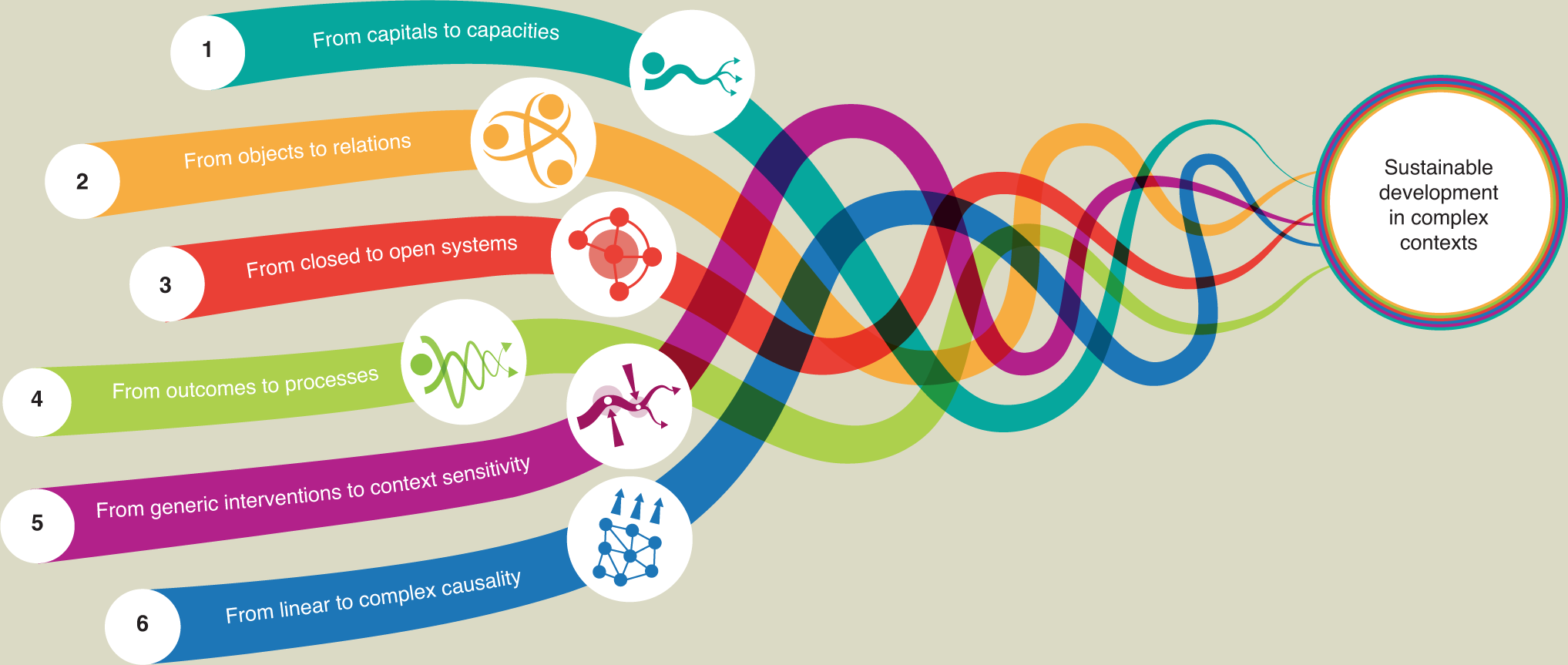
In a world facing unprecedented environmental crises, understanding bounciness has never been more crucial. Recent research highlights how resilience science is reshaping the way we approach sustainable development, moving beyond traditional methods to address complex and interconnected challenges.
Over the past decade, resilience science has moved into the mainstream of sustainable development, influencing significant changes in practice. This review identifies six essential shifts: From focusing on static capitals to dynamic capacities, from disconnected objects to involved relationships, and emphasizing processes over simple outcomes. These shifts acknowledge that sustainable solutions must consider the interdependencies of social and ecological systems, enhancing adaptability to change.
Advancing environmental sustainability, this research suggests that resilience provides a framework for fostering innovative approaches that can thrive amidst uncertainty, ultimately working towards the Sustainable Development Goals (SDGs). However, these practices may encounter trade-offs, particularly when overcoming the simplifications inherent in traditional developmental approaches.
In conclusion, integrating resilience into sustainability efforts could be transformative, guiding societies toward a more adaptable future that prioritizes ecological health and human well-being. This ongoing evolution in thought and practice demonstrates that addressing complexity is vital for genuine sustainable development, ensuring a balanced relationship between people and the planet.
Original Article:
Reyers, B., Moore, M.-L., Haider, L. J., & Schlüter, M. (2022). The contributions of resilience to reshaping sustainable development. *Nature Sustainability*, 5, 657–664. https://doi.org/10.1038/s41893-022-00889-6
By: Sofia Hernandez

Green manure being dug into the ground. Picture by:
https://www.gardenersworld.com/how-to/grow-plants/how-to-sow-green-manure/
Arsenic pollution in agricultural soils is a serious problem that poses a risk to public health and food safety, but what if there was a way to solve this issue? Kama et al., tells us that there are potential heroes waiting to save the day.
The study in this article examined the effects of crop rotation and green manure on arsenic (As) levels and soil health in arsenic-contaminated soils over the course of two experimental phases that involved the growing of brown rice. When compared to other types of green manure, the research conducted at the South China Agricultural University revealed that adding oil-seed rape and the Chinese milk vetch, types of green manure, considerably decreased the total As and increased the soil's total carbon and nitrogen levels. The findings showed that the green manure is essential to the cycling of nutrients, which enhances the fertility and health of the soil. Green manure lowers the bioavailability of arsenic, thus reducing potential health hazards. However, green manure is not a perfect hero, as the time and labor involved with this approach, along with investment, and green manure effectiveness based on soil type, are some potential trade-offs. Overall the article presents a very compelling approach to integrating ecological strategies into agricultural systems, if more research is done to back up these findings and target the aforementioned trade-offs, then it is safe to say we have a great solution to soil contamination by arsenic that will not require the use of chemicals and can be long-term.
Kama R, He J, Nabi F, Aidara M, Faye B, Diatta S, Ma C, Li H. Crop rotation and green manure type enhance organic carbon fractions and reduce soil arsenic content. Agriculture, Ecosystems & Environment. 2025;378:109287. doi:10.1016/j.agee.2024.109287
By: Astrid Salcedo
Original Article
Kaushal J, Khatri M, Arya SK. Recent insight into enzymatic degradation of plastics prevalent in the environment: A mini-review. Cleaner engineering and technology. 2021;2(100083):100083. https://linkinghub.elsevier.com/retrieve/pii/S2666790821000434. https://doi.org/10.1016/j.clet.2021.100083
Monday, October 14, 2024
Seeds for the future
By: Karime Holguin
This image is showing us how if we are able to transform not only our way of living but how it can all be tied to sustainable development as well as people's quality of life through the use of seeds. It also goes over the seeds based solutions on species level and ecosystem level this allows us to put a larger spectrum on this research (Mattana et al., 2022).
How can seeds contribute to the future? We might think that seeds are very small and not important to our future, but seeds are so much more than that. Seeds are very high value once you start to notice how many other ways, we are able to use seeds as well as store them. We have always relied on our NCP’s (Nature's contributions to people’s), those being as simple as food, water and biodiversity, which have started to decline. We have caused this to decline because we have had a lot of habitat loss and degradation as well as one that we are all familiar with that is pollution. How can we try and reverse this problem that humans have caused? We can start by looking into seeds. Seeds offer the human population new ways to help our natural capital. Not only are their existence value important, for instance that it can allow flowering plants to move in space and time, but their usage value is also important. We can use seeds for our economic growth like commercial crop varieties as well as perhaps indirect use or optional value such as nutritional and medical value. Seeds are structures composed of different compartments, those being the embryo, endosperm and maternal tissues. Seeds tend to have a high phenotypic plasticity (ability to adapt in diverse environments) which allows them to adapt to climatic changes. Dispersal of seeds allows them to avoid intraspecific competition as well as other seedlings; this lowers the risk of predation. Seeds are mostly dispersed by animals which can go back to increasing our NCP’s. If we are able to create a seeds bank with seeds that are native to where we live, we would be able to restore some of our ecosystems. As well as storing them for their use value and unlocking nutritional and medical value will not only help with the decline of our NCP’s but we can improve people's quality of life as well. There is still a lot of research needed to be done on how we would be able to conserve seeds for example we would need to consider long-term storing of our seeds. One problem that could arise from that would be pests. Considering seeds for our future does not sound so bad once you realize how much seeds actually contribute to our world.
Original article citation:
Mattana E, Ulian T, Pritchard HW. 2022. Seeds as natural capital. Trends Plant Sci. 27(2):139-146.